
 April 14, 2026
  Ysel Hernandez
Working from home has a lot going for it. No commute. Your own coffee maker. The freedom to set your own schedule. For millions of professionals, it’s been a revelation.
But there’s a version of working from home that quietly costs you — in productivity, in client perception, in revenue, and in your own mental and professional growth. And the tricky part is that it often doesn’t announce itself loudly. It creeps in.
If you’ve been working from home for more than a few months, here are five honest signs that your setup may be holding your business back — and what you can do about each one.
Sign #1: You’re Losing Hours to Distractions You Can’t Control
The dog. The doorbell. The laundry that’s been sitting in the dryer since Tuesday. A partner or family member who “just needs a quick second.” The refrigerator that’s somehow always twelve feet away.
Home distractions are relentless, and the research backs this up. Studies consistently show that remote workers report higher levels of interruption than their office-based counterparts — and that each significant interruption takes an average of 23 minutes to fully recover from cognitively.
If you find yourself at the end of a workday wondering where the time went, the honest answer might be: home.
A distraction you can’t control is a tax on your output. The question is how much you’re willing to pay.
What to do about it:
Designate your highest-focus work hours for a dedicated external workspace. A coworking environment with a culture of quiet productivity — like a dedicated desk at a professional facility — can recover hours of deep work each week that you’re currently losing at home.
Sign #2: Clients and Prospects Don’t Take You Quite as Seriously
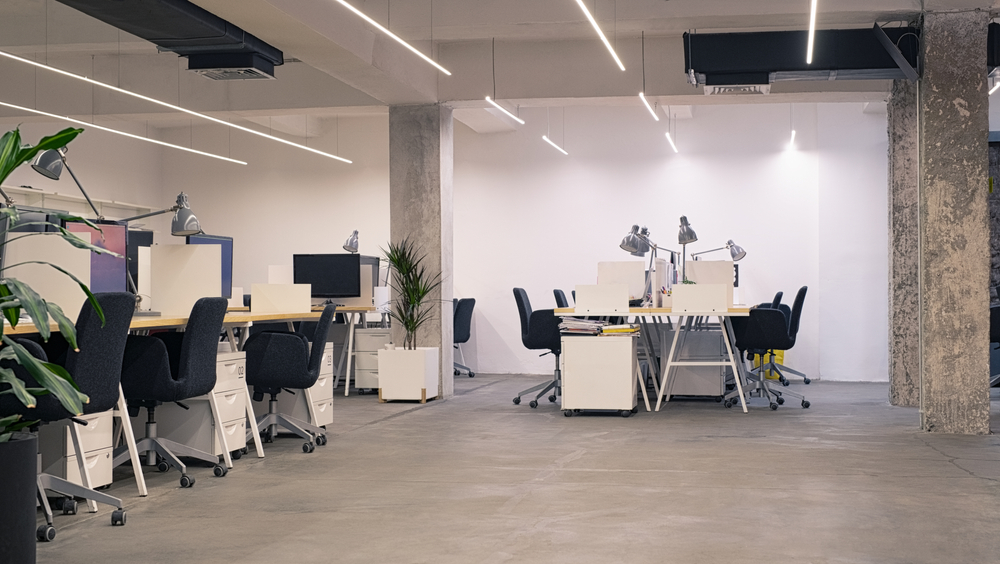
This one stings a little to say, but it’s worth saying: where you meet people matters. What’s behind you on a video call matters. The address on your business card matters.
None of this is about pretense. It’s about the signals that clients and prospects use — consciously or not — to calibrate trust, professionalism, and perceived value. A barking dog in the background of your discovery call. A kitchen visible behind you on Zoom. A home address on your invoices. Each of these is a small signal, and small signals add up.
You may never know which deals you didn’t close because of environment — but you’d probably be uncomfortable if you did.
What to do about it:
A virtual office membership gives you a professional business address and mail handling for as little as $75/month — no full-time office required. For client-facing meetings, booking an on-demand conference room for a few hours projects far more authority than any home setup can. The ROI on a single well-run client meeting can cover months of membership costs.
Sign #3: Your Work-Life Boundaries Have Basically Dissolved
When your office is your home, work never really ends — it just changes intensity. You check email at dinner. You answer a Slack message at 10pm because your laptop is right there. You start your day at 7am because, well, you’re already here.
This sounds like dedication. What it actually is, often, is a slow burn toward burnout. Research on remote work consistently finds that the absence of physical separation between work and personal life is one of the primary drivers of remote worker exhaustion and disengagement.
The commute, as annoying as it was, served a psychological function: it was a ritual that told your brain “work is starting” and “work is ending.” Without that transition, the two states bleed into each other — and both suffer.
The irony of working from home is that it can make you work more hours while getting less done.
What to do about it:
Build physical transitions back into your week. Even working from a co working space two or three days a week creates the ritual of arrival and departure that helps your brain compartmentalize. You leave work at work. You come home to actually be home. Both your business and your personal life get better versions of you.
Sign #4: You Feel Isolated and Your Network Is Shrinking
Professional isolation is one of the most underreported costs of long-term remote work. When you’re not bumping into colleagues in hallways, grabbing lunch with peers, or attending casual industry gatherings, your network slowly contracts — and with it, the flow of referrals, ideas, opportunities, and collaboration.
Most solo professionals working from home report that the majority of their new business comes from existing relationships, not new ones. That’s sustainable for a while — until it isn’t. Relationships require maintenance and proximity to grow, and the home office offers almost none of the casual contact that keeps professional networks alive.
Beyond business impact, isolation affects mood, motivation, and creativity in ways that are hard to measure but easy to feel. If you’ve noticed your energy or enthusiasm for your work declining over time, it may not be the work — it may be the environment.
What to do about it:
Co working spaces are, at their core, communities. The people working alongside you at Lakeside Workspaces — across industries, at different stages of business — represent a living, breathing network. Relationships that start with a shared kitchen and a conversation over coffee have a way of turning into referrals, partnerships, and friendships. You can’t engineer that at home.
Sign #5: Your Productivity Has Plateaued — or Quietly Declined
In the early days of working from home, many people experience a productivity boost. The novelty is energizing. The lack of commute frees up time. The autonomy feels liberating.
But over months and years, something often shifts. The novelty wears off. The boundaries erode. The distractions accumulate. And productivity — which was never as easy to measure as hours logged — quietly declines without a clear moment you can point to.
Signs to watch for:
- Tasks that used to take two hours now take most of the day
- You find yourself “busy” but unsure what you actually accomplished
- Your best, most creative work is happening less frequently
- You’re postponing difficult tasks more than you used to
- Your to-do list is growing faster than you’re clearing it
Any of these can happen for lots of reasons. But if they’ve coincided with your shift to full-time home working, the environment deserves serious consideration as a factor.
Productivity isn’t just about time management. It’s about environment design — and the home office often works against you.
What to do about it:
Experiment deliberately. Spend two or three weeks working from a professional co working environment and honestly track your output. Most people are surprised by how much more they accomplish when surrounded by other focused professionals in a space designed for work — not rest, not family, not leisure. Just work.
Also Read: 8 Hidden Perks of Co Working Spaces
You Don’t Have to Choose Between Flexibility and Professionalism
The good news is that this isn’t an all-or-nothing decision. You don’t have to sign a five-year office lease to solve any of these problems. The modern flexible workspace model is designed exactly for professionals who want the best of both worlds.
A coworking membership at Lakeside Workspaces in Weston starts at $99/month for flex access and $299/month for a dedicated desk — giving you a professional environment, a community, and a clear separation between work and home whenever you need it. Add a virtual office plan and your business gets a professional address and mail handling without any full-time commitment.
You can keep the autonomy and flexibility of working on your own terms. You just don’t have to keep paying the hidden costs of doing it entirely from home.